A brief overview
Enga Pre-Colonial History
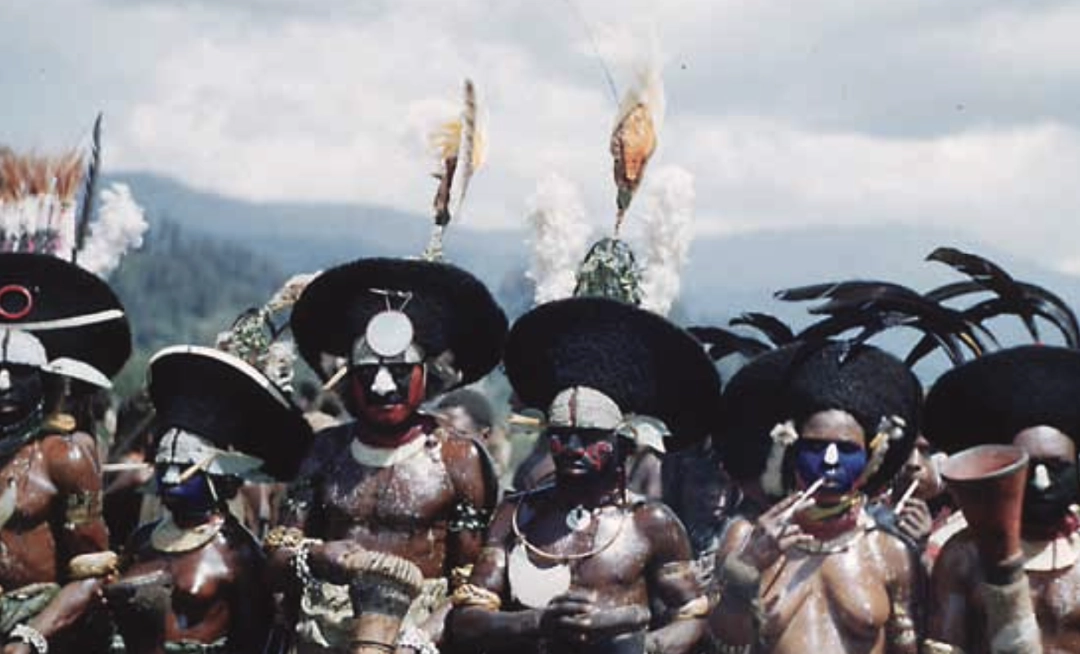
This overview of the last 400 years of pre-colonial history was written for the reference book for the Enga Cultural Education Program; we have modified it for this website. We have two goals. The first is to allow readers to understand the timing and development of some of the traditions discussed historical traditions such as the Sangai ceremonies for youths, the Great Ceremonial Wars, the Yae Tee and the Kepele ancestral rituals of western Enga. The second is to make readers aware of how dynamic Enga society has been over the past 300-400 years. Rapid change was well underway centuries before the arrival of explorers, patrols, missions and the Australian Colonial Administration.
Chapter Three
Enga Before Sweet Potato
travelers, traders & experimenters
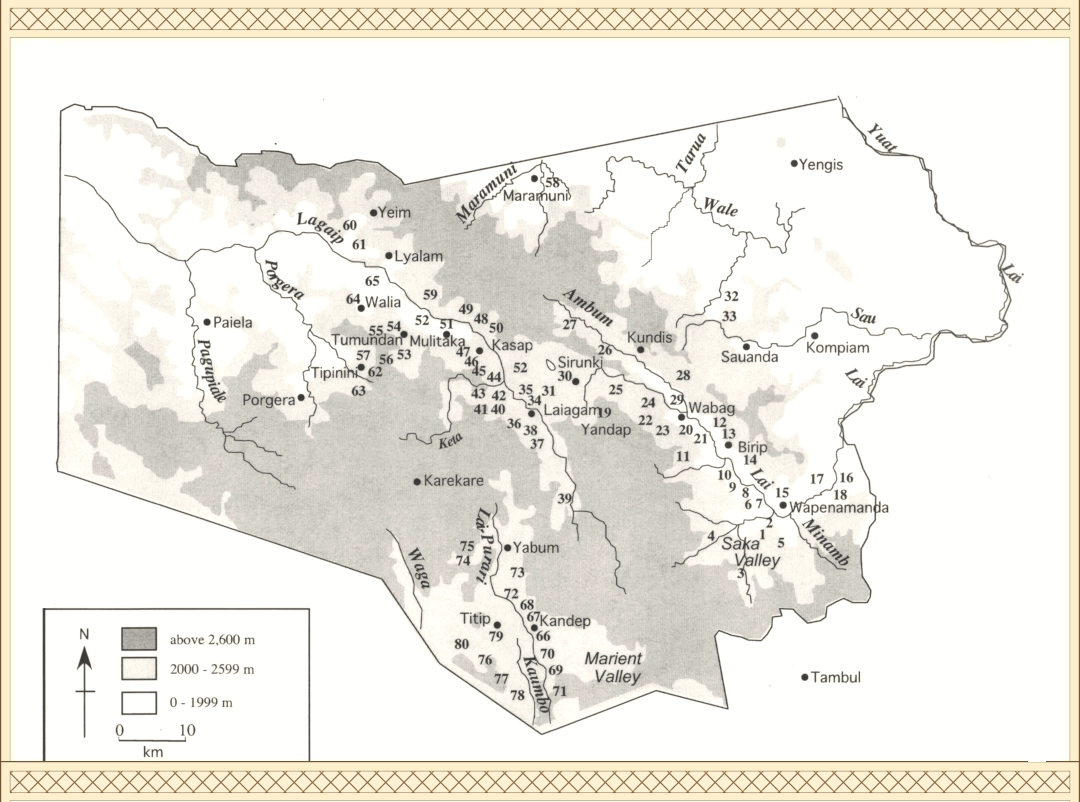
Map 2. Location of Enga-speaking tribe claiming origins in the Enga Province
Saka and Layapo Enga
2. Waimini
3. Pauakaka
4. Sikini
5. Inapini
6. Aluni
7. Yoko
8. Itokone
9. Yanaitini
10. Lyongeni
11. Depe
12. Pumalini
13. Tinilapini
14. Lungupini
15. Yandamani
16. Pyaini
17. Tokopetani
18. Sinyi
Saka and Layapo Enga Continued
21. Yakani
22. Itapuni
23. Awaini
24. Malipini
25. Potealini
26. Pumane
27. Aiele
28. Sene
29. Yokasa
30. Lyaini
31. Tia
32. Waitini
33. Lakini
Mai-Yandapo Enga
20. Apulini
Upper Lagaip
35. Walini
36. Pyaini
37. Sambe
38. Kunalini
39. Lote
40. Pumane
41. Wau
42. Andamane
43. Angalaini
Tayato Enga
45. Yambanima
46. Piandaine
47. Monaini
48. Limbini
49. Kaiya
50. Tupini
51. Konemane
52. Mulapini
53. Pumane
54. Yangutini
55. Yandape
56. Kundiki
57. Kisipini
58. Wawini-Yangi
59. Tiwini
60. Auwini
61. Lambuaka
62. Mondatepa
63. Kapini
64. Maeyango
65. Pandane
KANDEPE REGION TRIBES
86 Aimbatepa
87 Akulya*
88 Alitipa
89 Bipi (3)
90 Enza*
91 Ima
92 Kamani
93 Kambia*
94 Kambitipa
95 Kapini (2)
96 Kototepa
97 Kupatopa*
98 Kunalini
99 Kuu (2)
100 Lyatepa*
101 Lyumbi
102 Mamba*
103 Masa*
104 Maulu
105 Mondatepa
106 Pima*
107 Tatali
108 Timitopa
109 Talipuni
110 Yamape
111 Yamatepa*
Saka and Layapo Enga
1. Yambatane
2. Waimini
3. Pauakaka
4. Sikini
5. Inapini
6. Aluni
7. Yoko
8. Itokone
9. Yanaitini
10. Lyongeni
11. Depe
12. Pumalini
13. Tinilapini
14. Lungupini
15. Yandamani
16. Pyaini
17. Tokopetani
18. Sinyi
Saka and Layapo Enga Continued
21. Yakani
22. Itapuni
23. Awaini
24. Malipini
25. Potealini
26. Pumane
27. Aiele
28. Sene
29. Yokasa
30. Lyaini
31. Tia
32. Waitini
33. Lakini
Mai-Yandapo Enga
19. Lyipini
20. Apulini
Upper Lagaip
34. Waitini
35. Walini
36. Pyaini
37. Sambe
38. Kunalini
39. Lote
40. Pumane
41. Wau
42. Andamane
43. Angalaini
Tayato Enga
44. Sakate
45. Yambanima
46. Piandaine
47. Monaini
48. Limbini
49. Kaiya
50. Tupini
51. Konemane
52. Mulapini
53. Pumane
54. Yangutini
55. Yandape
56. Kundiki
57. Kisipini
58. Wawini-Yangi
59. Tiwini
60. Auwini
61. Lambuaka
62. Mondatepa
63. Kapini
64. Maeyango
65. Pandane
KANDEPE REGION TRIBES
86 Aimbatepa
87 Akulya*
88 Alitipa
89 Bipi (3)
90 Enza*
91 Ima
92 Kamani
93 Kambia*
94 Kambitipa
95 Kapini (2)
96 Kototepa
97 Kupatopa*
98 Kunalini
99 Kuu (2)
100 Lyatepa*
101 Lyumbi
102 Mamba*
103 Masa*
104 Maulu
105 Mondatepa
106 Pima*
107 Tatali
108 Timitopa
109 Talipuni
110 Yamape
111 Yamatepa*
Map 3. Approximate location of Enga tribes at the time of first contact with the Europeans
EASTERN REGION
LAYAPO
1 Aluni
2 Depe
3 Gipini*
4 Itokone
5 Kandawalini
6 Kumbi*
7 Lungupini (2)
8 Lyakani* (Sikini)
9 Lyipini
10 Lyomoi
11 Maini*
12 Matea* (Sikini)
13 Nenaini
14 Pauakaka
15 Pumalini
16 Pyaini
17 Pyapini
18 Sikini
19 Sinyi
20 Tinilapini (2)
21 Tokopetaini
22 Ulidane*
23 Waimini
24 Waipalini* (Depe)
25 Wauni
26 Yakumane
27 Yambatane
28 Yandamani (2)
29 Yatapaki
30 Yoko
31 Yoponda
KOMPIAM REGION
SAU AND KOPONA
32 Aiyamane
33 Aiyele (3)
34 Inapini
35 Kungu (4)**
36 Ingi (2)
37 Lakani (3)
38 Lyongeni
39 Nenge*
40 Pumane
41 Tiaka**
42 Waitini
43 Yangutini*
44 Yangini/Pakaini (Yakani)
CENTRAL REGION
MAI AND YANDAPO
45 Apulini (2)
46 Awaini
47 Itapuni
48 Kunalini (2)
49 Lyaini
50 Malipini
51 Potealini
52 Sakalini
53 Tia
54 Yakani
55 Yanaitini
WESTERN REGION
UPPER LAGAIP/ TAYATO
56 Angalaini
57 Auwini
58 Kaiya (2)
59 Kamani
60 Kisipini
61 Konemane
62 Kundiki (3)
63 Lambuaka
64 Limbini (2)
65 Lote
66 Maeyango
67 Monaini (2)
68 Mulapini (4)
69 Pandame
70 Piandane (2)
71 Pumane (2)
72 Pyaini
73 Sakate
74 Sambe
75 Tekepaini (2)
76 Tiwini
77 Tombe*
78 Tupini (2)
79 Walini
80 Waitini
81 Wawini
82 Yambanima
83 Yandape (2)
84 Yangi
85 Yangutini (2)
KANDEPE REGION
ATONE and KATINJA
86 Aimbatepa
87 Akulya*
88 Alitipa
89 Bipi (3)
90 Enza*
91 Ima
92 Kamani
93 Kambia*
94 Kambitipa
95 Kapini (2)
96 Kototepa
97 Kupatopa*
98 Kunalini
99 Kuu (2)
100 Lyatepa*
101 Lyumbi
102 Mamba*
103 Masa*
104 Maulu
105 Mondatepa
106 Pima*
107 Tatali
108 Timitopa
109 Talipuni
110 Yamape
111 Yamatepa*
In the fertile valleys of eastern Enga, subsistence farmers grew taro, kotena, yams, bananas, sugarcane and other crops on the lower terraces. Kotena, a large tuber that was tougher than taro, was used as a famine food. Mid-valley slopes were kept for pig forage and the high forest for hunting and gathering. There is an amusing story of a man who had just put his kotena in the ashes when some enemy arrived. He fought off the enemy single handed until his kotena was cooked, so hungry he was: Kotena yangatala yandate nyia.
In central Enga, people cultivated mixed gardens, hunted and gathered wild foods as described in the Malipini origin story:
“ In the beginning, a long time ago when there were few people, there was a man named Kindole Puu. He had a beautiful house surrounded by gardens with all kinds of food and sambisambi grass. He made the inside comfortable with marsupial furs, cassowary feathers, and the feathers of other birds. He ate well, living from fresh cuscus meat, the meat of cassowaries, smaller birds as well as the food from his gardens. Year after year he went on living this good life but was lonely because he had everything but a wife.”
Ambaipu Yakena, Malipini Kamaniwane clan, Kundis, Ambum valley, 1987)
For western Enga, historical traditions tell a different story. In the high country of western Enga 2100-2200 meters above sea level lived mobile groups who were largely dependent on hunting and gathering. These ‘hunters’ were said to have great physical strength and ritual powers and attained high status. Shifting horticulturalists, who lived from taro, other garden foods, and hunting, inhabited the narrow valleys below. Historical traditions and myth from western Enga depict culturally recognized distinctions between ‘hunters’ and ‘horticulturalists.’ These groups intermarried and exchanged wealth, but also had relationships filled with tension and misunderstanding. Gardening was insecure in the Lagaip and shifting horticulturalists traded with groups to the north for sago and with hunter-gatherers in the high-country meat and forest products.
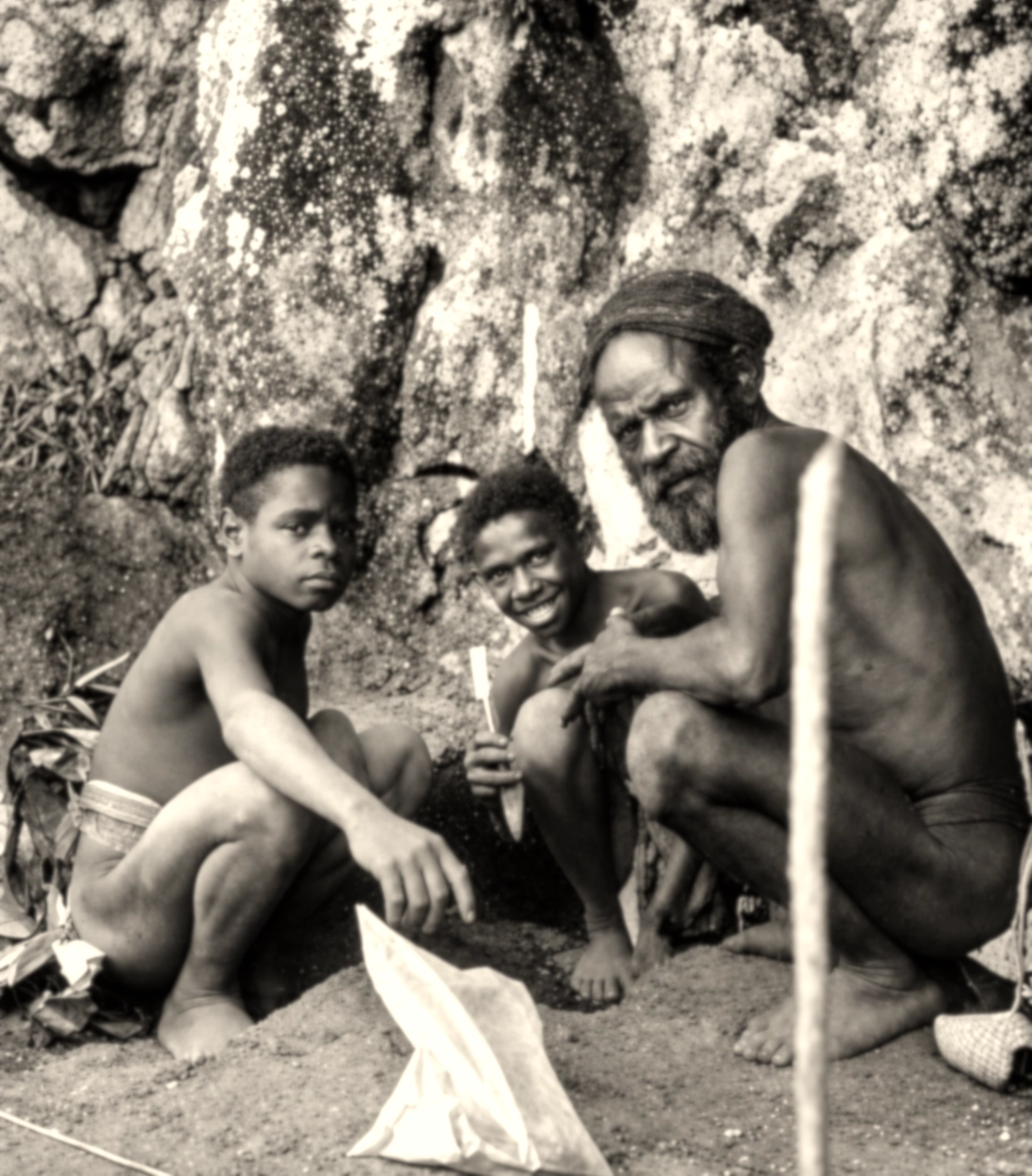
From the very beginning, Enga appears to have been an open society of travelers, traders and experimenters. Oral traditions describe a sense of loneliness in a sparse population. People traveled extensively seeking trade, spouses, attending rituals, harvesting pandanus in the high forest, or seeking refuge after wars or severe frost. The plots of early oral traditions center around hunting, the trade of salt, axes, tree oil, shells and plumes. A few pigs were kept but not given great importance. Wars were fought to break up communities that had become too large to cooperate or to displace troublesome neighbors. Once they established separate communities, warring clans often resumed intermarriage and exchange. In eastern Enga there was a well-developed trade alliance to import axe stone from quarries in Western Highlands in exchange for salt from the Yandap, amongst many other trade goods. This trade began more than 1000 years ago and was controlled by strong leaders.
The Arrival of Sweet Potato
As the legend goes, sweet potato was first brought from the Sepik into Walya near Tumundane. It arrived at a time of severe famine and was accepted as a food that saved people from starvation. It also corresponded with an event ‘yuu kuia’, the time of darkness when a volcano on Long Island off the northern coast of PNG erupted, covering the Highlands in a thick blanket of ash, believed to have occurred in 1662. The arrival of the sweet potato was celebrated until the 1960s in a ritual Aina Puingi Toko, the bridge of sweet potato vines, during times of environmental hardship. Each place where it was held has a legend of wandering women bringing sweet potato vines; songs are still remembered.
The new crop had a strong impact on the Enga economy because it grew at higher altitudes and on poorer soil than taro. It was less susceptible to blight and took less time to mature. It provided secure diet in areas where gardening had been unreliable. Sweet potato was also better food for pigs than taro because it did not need to be cooked. For the first time it permitted Enga to produce a storable agricultural surplus in the form of pigs to set off great social and economic change.
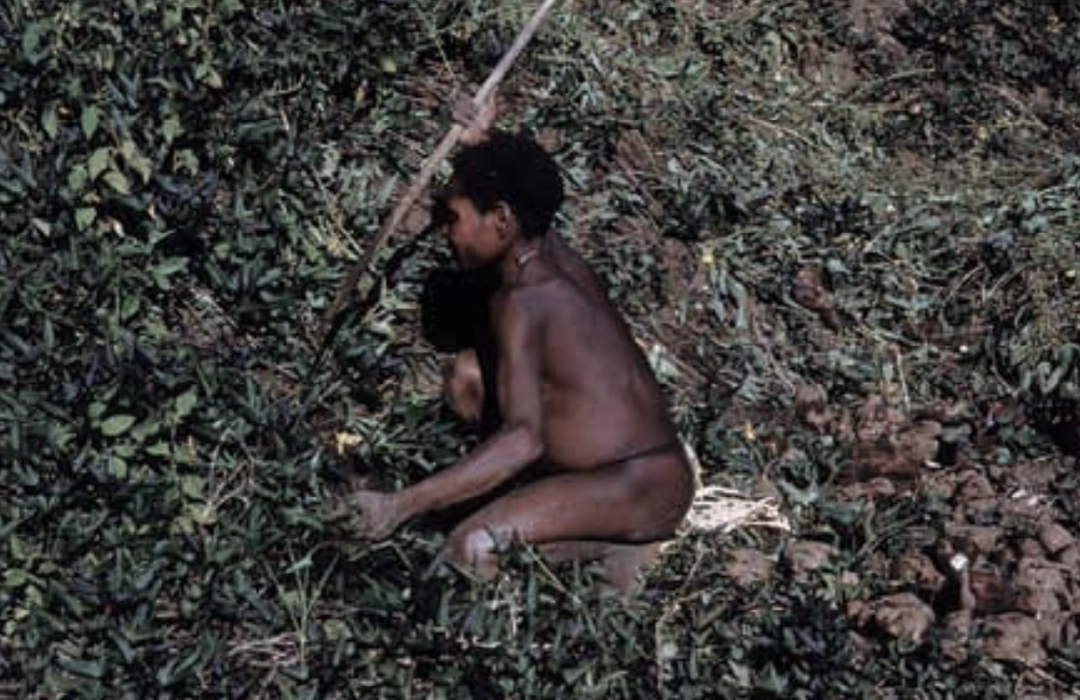
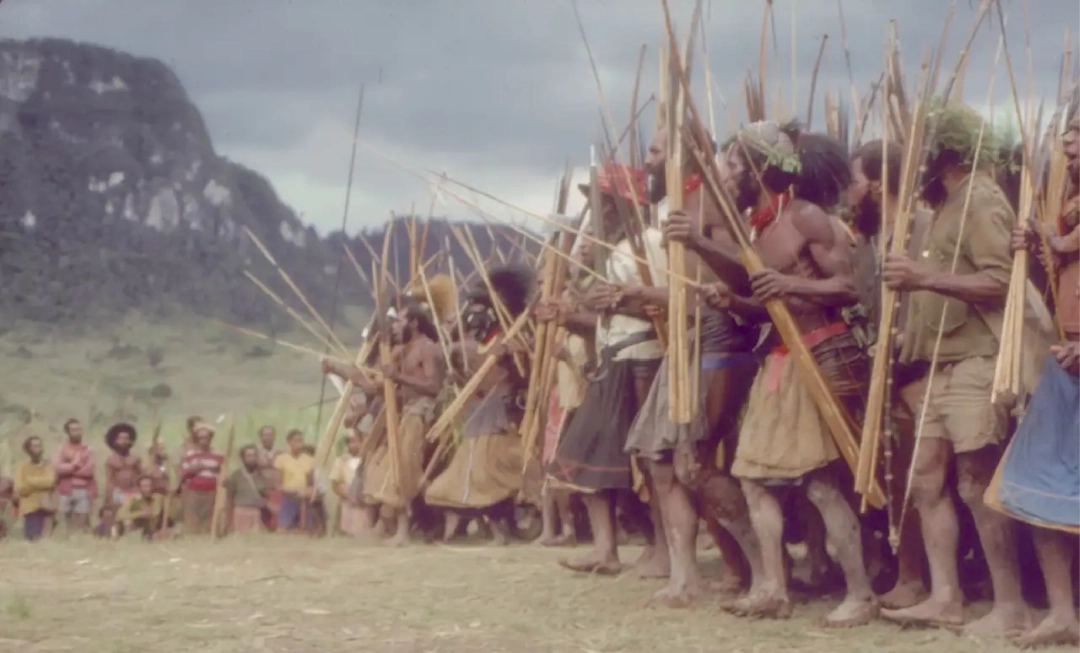
PHOTO BY: Don Jeffers, mid-Lai, 1960s
Changes After Sweet Potato
Western Enga
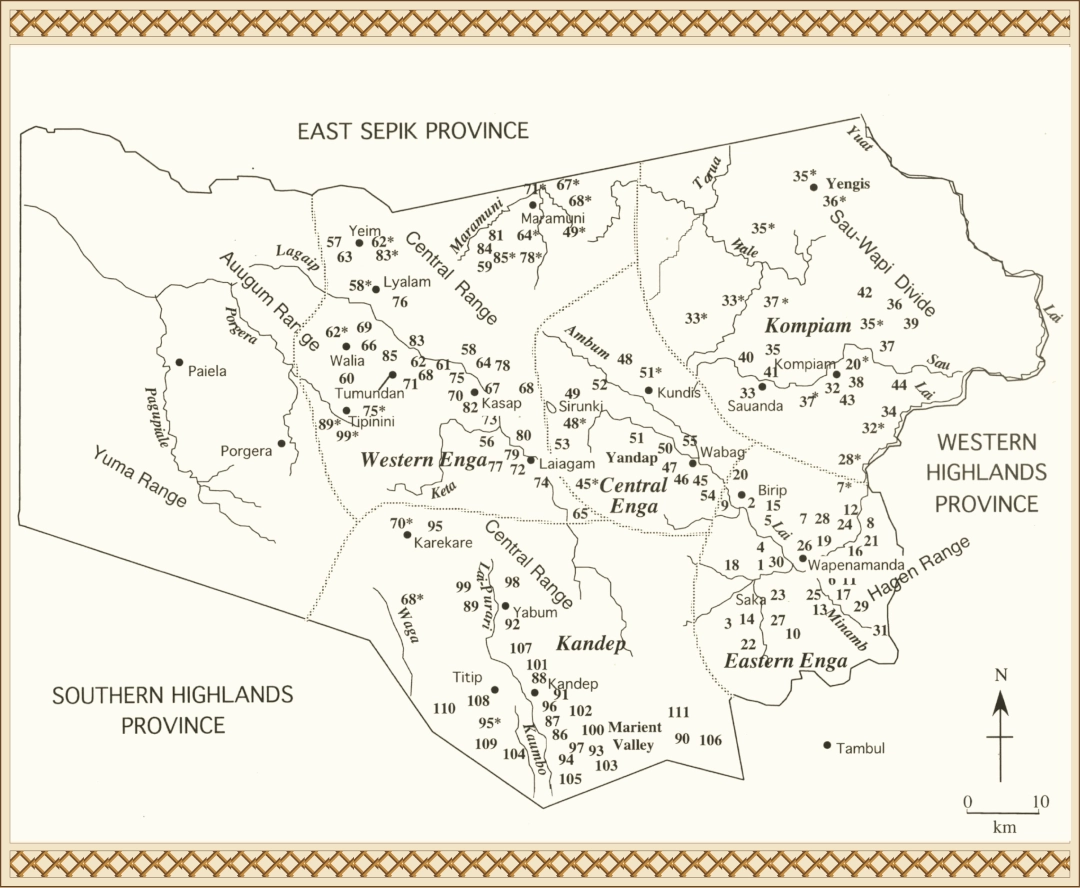
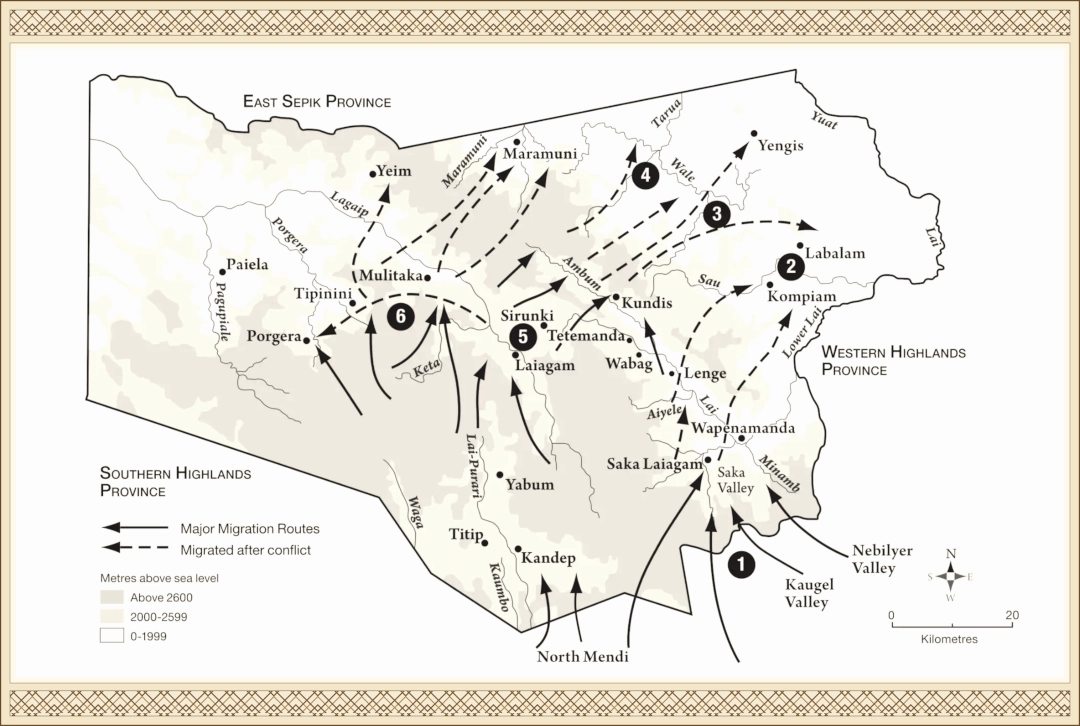
Migrations occurred all over Enga in response to potential offered by sweet potato and conflicts generated by population movements (MAP 4). Enga clans settled areas like Kompiam, Maramuni and Porgera for the first time. In western Enga population shifts occurred as groups who had lived largely by hunting and gathering moved down into the Lagaip to take advantage of the easier life possible with the new crop.
The population was sparse at the time so maternal kin and in-laws living in lower valleys sought more clan members to help them with clearing gardens, defending the clan, providing marriage partners and holding festivities. Often relations did not work out as planned and conflicts broke out over work, hunting, gardens, marriage, insult, theft and misunderstanding. Some conflicts escalated into wars that led to migrations to the north, to the west and to the south.
Map 4. Major migrations after the arrival of the sweet potato.
EASTERN REGION
KOMPIAM REGION
CENTRAL REGION
WESTERN REGION
KANDEPE REGION
look for captions
EASTERN REGION
LAYAPO
1 Aluni
2 Depe
3 Gipini*
4 Itokone
5 Kandawalini
6 Kumbi*
7 Lungupini (2)
8 Lyakani* (Sikini)
9 Lyipini
10 Lyomoi
11 Maini*
12 Matea* (Sikini)
13 Nenaini
14 Pauakaka
15 Pumalini
16 Pyaini
17 Pyapini
18 Sikini
19 Sinyi
20 Tinilapini (2)
21 Tokopetaini
22 Ulidane*
23 Waimini
24 Waipalini* (Depe)
25 Wauni
26 Yakumane
27 Yambatane
28 Yandamani (2)
29 Yatapaki
30 Yoko
31 Yoponda
KOMPIAM REGION
SAU AND KOPONA
32 Aiyamane
33 Aiyele (3)
34 Inapini
35 Kungu (4)**
36 Ingi (2)
37 Lakani (3)
38 Lyongeni
39 Nenge*
40 Pumane
41 Tiaka**
42 Waitini
43 Yangutini*
44 Yangini/Pakaini (Yakani)
CENTRAL REGION
MAI AND YANDAPO
45 Apulini (2)
46 Awaini
47 Itapuni
48 Kunalini (2)
49 Lyaini
50 Malipini
51 Potealini
52 Sakalini
53 Tia
54 Yakani
55 Yanaitini
WESTERN REGION
UPPER LAGAIP/ TAYATO
56 Angalaini
57 Auwini
58 Kaiya (2)
59 Kamani
60 Kisipini
61 Konemane
62 Kundiki (3)
63 Lambuaka
64 Limbini (2)
65 Lote
66 Maeyango
67 Monaini (2)
68 Mulapini (4)
69 Pandame
70 Piandane (2)
71 Pumane (2)
72 Pyaini
73 Sakate
74 Sambe
75 Tekepaini (2)
76 Tiwini
77 Tombe*
78 Tupini (2)
79 Walini
80 Waitini
81 Wawini
82 Yambanima
83 Yandape (2)
84 Yangi
85 Yangutini (2)
KANDEPE REGION
ATONE and KATINJA
86 Aimbatepa
87 Akulya*
88 Alitipa
89 Bipi (3)
90 Enza*
91 Ima
92 Kamani
93 Kambia*
94 Kambitipa
95 Kapini (2)
96 Kototepa
97 Kupatopa*
98 Kunalini
99 Kuu (2)
100 Lyatepa*
101 Lyumbi
102 Mamba*
103 Masa*
104 Maulu
105 Mondatepa
106 Pima*
107 Tatali
108 Timitopa
109 Talipuni
110 Yamape
111 Yamatepa*
look for captions
Distressed by frequent warfare, people sought new ways to discipline young men as well as to build tribal unity and cooperation. It is around this time that Sangai ceremonies started in central Enga and spread. The Sangai disciplined young men, kept them under the control of older men and created strong bonds between clan brothers.
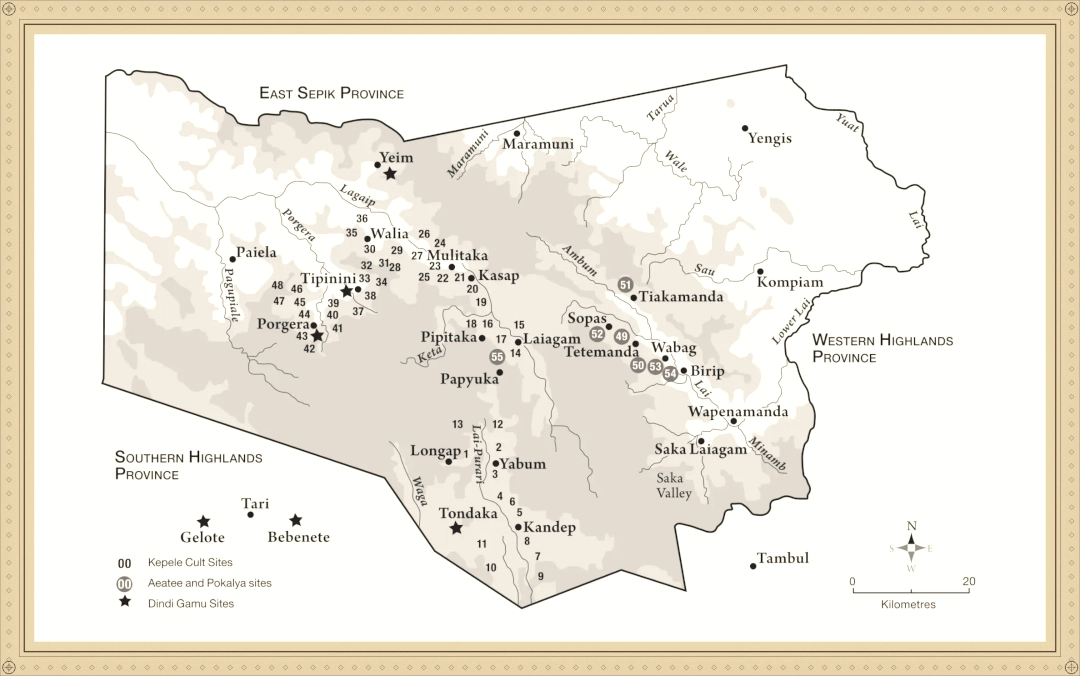
Around the same time, Kepele ceremonies for the ancestors were elaborated into five-day celebrations. Tribal members, who had been dispersed by migration, came together bringing food and materials from their areas. During the Kepele, boys were initiated, clans of a tribe unified and communication with the ancestors restored. Relatives from many surrounding tribes came for the celebrations where marriages were arranged and trade goods exchanged. Kepele ceremonies of different tribes were linked with ritual experts from some tribes and many celebrants participating in Kepele rituals of other tribes. The network was described as a snake with its head in Kandep and tail in Porgera though the Kepele was also adopted and modified in central Enga where it was called Aeatee (MAP 5)
Map 5 Location of Kepele, Aeatee and Pokalya ritual sites.
Kepele-Aiamane houses
1. Telyatesa of Bipi
2. Yabum of Kamani
3. Tolename of Tatali
4. Lyumbi of Lyumbi
5. Wauma of Ima
6. Mongapya of Alitipa
7. Konaita of Kambitipa
8. Kondo of Aimbatepa
9. Lakalapa of Kambitipa
10. Tilya of Maulu and Yalipuni
11. Kotadailya-Tauli of Timitopa
12. Komale of Kunalini (built in 4th–5th generation)
13. Mokale of Kuu
14. Aia of Sambe
15. Kanake of Sambe
16. Keokungusa (also called Meme or Ipai) of Walini
17. Waimayokosa of Pyaini
18. Pipitaka of Sakate
19. Ipakatupya of Yambanima (skull house)
20. Maeyapu of Yambanima and Sakate Ipa
21. Kasap of Monaini and Tupini
22. Sangurapa of Tekepaini (a branch of Bipi)
23. Mongalo of Monaini Diuatini, Kipula, and Maitanaka, and of Kaia Kambiaka and Tanguni
24. Lumbi of Kaia
25. Imaka of Konemane
26. Ipau of Tiwini
27. Yoko of Mulapini
28. Wanepaka of Kundiki (skull house)
29. Pokalipa of Kundiki
30. Waimalama or Tapandaka of Pumane, Yandape, and Yangotini (skull house)
31. Takate (female site of the same)
32. Paina of Kisipini
33. Tatosa of Tokelya
34. Pakoanda of Pakoa
35. Polakaimbu of Maeyango
36. Yambuku of Pandame
37. Tekepetoa-Ipandaka of Yomondaka, Tekepaini, and Kungutini
38. Kumbate (skull house of the same)
39. Ummambo of Mayuni and Bipi
40. Olea of Yewanakali and Nomali
41. Yulindaka of Makepa
42. Uli of Aipakane
43. Koylaka of Payame
44. Upaliaka of Waiwa
45. Aipaka (Anawe) of Pulumani
46. Mungalepa of Angalaini
47. Imoanda of Tuanda
48. Ekalata (Kupiana) of Tieni
Aeatee houses
49. Tetemanda of Yanaitini
50. Irelva of Apulini
51. Tiakamanda of Potealini (also called Kepele)
52. Sopas of Malipini (also called Kepele)
Pokalya houses
54. Komalemanda of Depe
55. Wapele of Pyaini
Central Enga
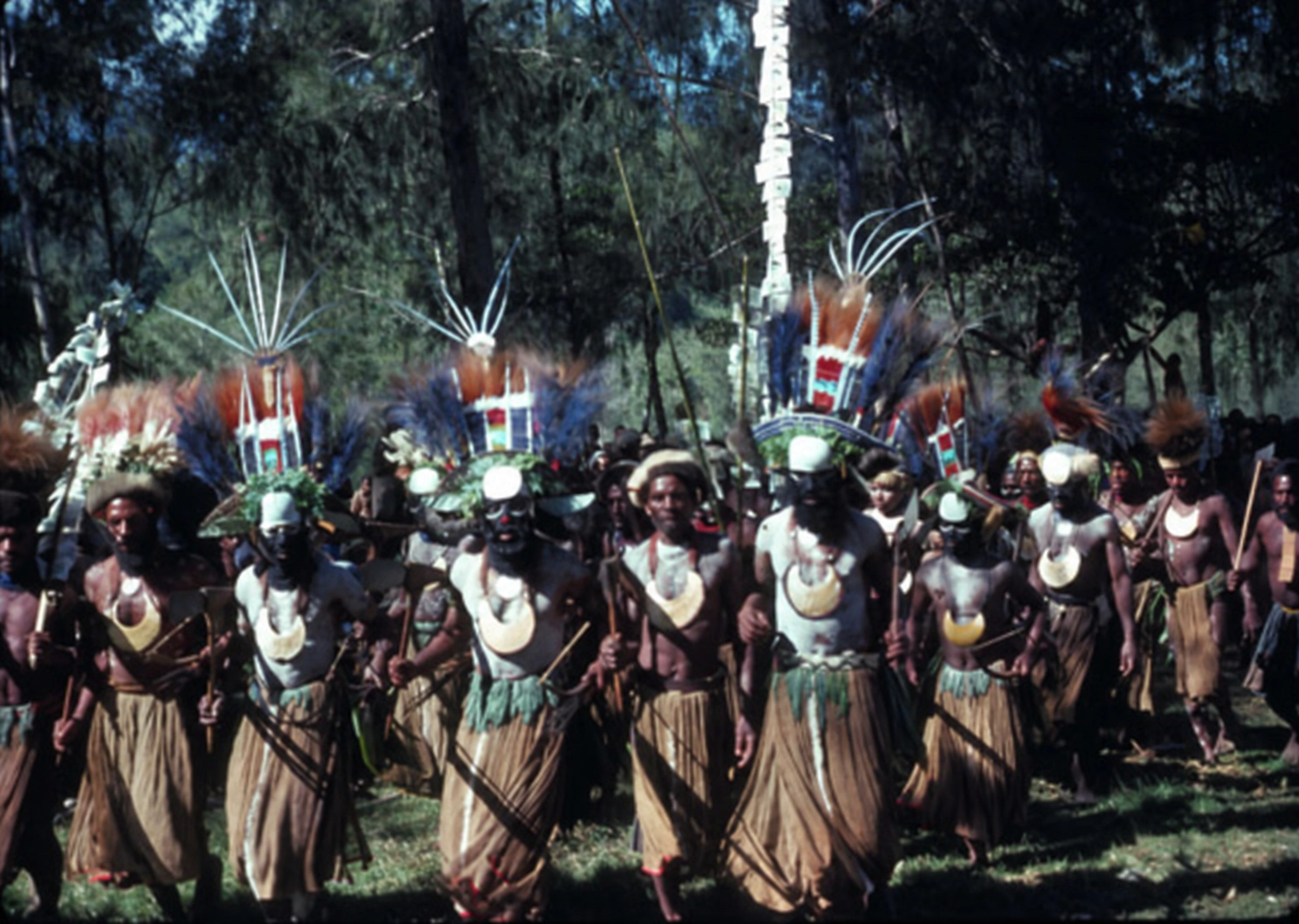
In response, the Great Ceremonial Wars, yanda andake, were developed in central Enga out of efforts to maintain some of the positive aspects of the wars and yet to avoid the negative ones. These Great Wars were fought between entire tribes or pairs of tribes in central Enga at 8–12-year intervals. The first ones began in the early 1800s, and the last one was fought around 1940. Allies clans or tribes hosted the ‘owners of the fight’ by providing them with housing, food, water, allies and a battlefield. After opening ceremonies, hundreds of warriors in full ceremonial dress exchanged volleys of arrows while spectators gathered from far and wide to watch. Women danced and sang along the sidelines. Men fought by day and courted women from host and allied clans by night.
These ‘battles without anger’ went on for weeks or months with pauses for participants to go home, tend gardens and rest. Deaths were not avenged and no land was won or lost. When a formal end to battle was called there were huge feasts and thousands of pigs changed hands. The exchanges that followed the battles created marriage ties, partnerships of trade and exchange, and other alliances between clans of the Lagaip, Lai, the Ambum and Sau valleys. MAP 6.
Map 6. Location of the Great Ceremonial Wars in relation to the Tee Cycle
MAP LEGEND
1. Lyaini-Sakalini versus Pumane Aiele;
2. Itapuni-Awaini versus Malipini-Potealini;
3. Monaini versus Yanaitini;
4. Yanai versus Sene-Yokasa
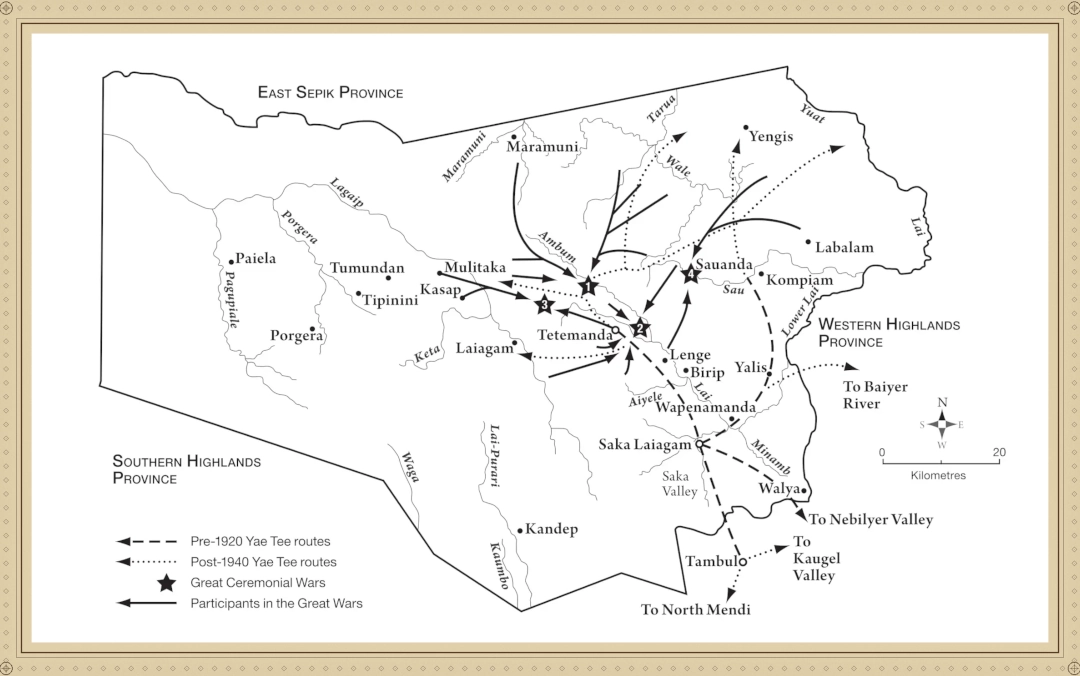
MAP LEGEND
1. Lyaini-Sakalini versus Pumane Aiele;
2. Itapuni-Awaini versus Malipini-Potealini;
3. Monaini versus Yanaitini;
4. Yanai versus Sene-Yokasa
Eastern Enga
Migrations in the east also threatened the established axe stone/salt trade. In response, clans involved in the trade developed new economic strategies. Leaders called on distant partners down trade routes to send pigs to supply them with a large amount of wealth in one place at one time to carry out complex political strategies. Pigs and other wealth were paid back at a later date creating the early Yae Tee cycle. Although the Yae Tee began on a small scale, other clans saw the advantages of the economic strategy and joined. Soon there were routes from Tambul, to the Saka, down the lower Lai and through Itokone to Lenge and on to Tetemanda (MAP 7).
Map 7. Tee Cycle Routes by Development Stages
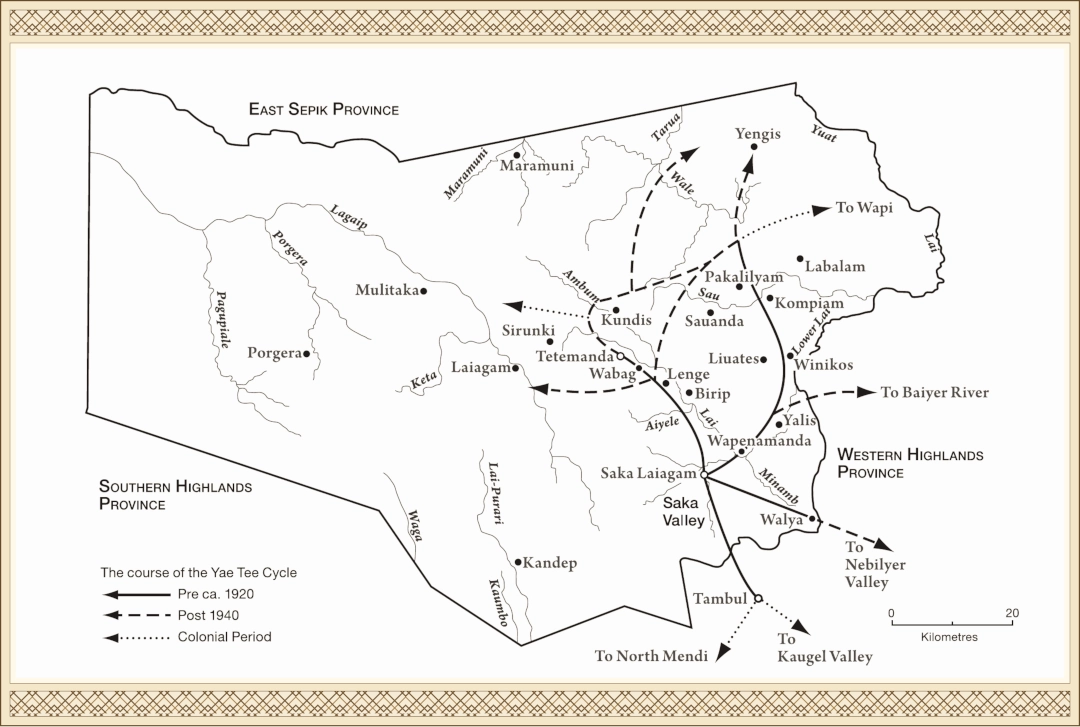
Warfare Compensation to the Enemy
Meanwhile, throughout Enga other developments were taking place. In earlier times land was plentiful and clans were not so closely tied together through Tee exchanges. Clans fought, paid compensation to allies and dispersed. As the landscape filled there was not so much free land to settle on. Neighboring clans did not want to lose neighbors on whom they depended for providing pigs for their Tee exchanges. Most men had wives or mothers from neighboring clans and did not want to drive away in-laws and maternal kin who assisted them in many activities. They wanted to fight to reestablish balance, settle problems, make peace and stay put. Around the fifth generation before present, warfare compensation that had previously been given only to allies was also paid to enemy to make peace. Big-men (kamongo) gained much influence in their roles as peacemakers and organizers of compensation exchanges.
The Development of the Final Yae Tee
From this point on Enga history becomes very complex. By the fifth-generation great leaders, kamongo, from the east became aware of the large amounts of wealth flowing in the Great Ceremonial War exchanges. They timed their Yae Tee cycles so that they would harvest wealth coming out of these exchanges and move it eastward. When it came time for Great War exchanges, leaders in the west would draw wealth from their partners in the east for their exchanges. In this way the systems became closely linked. Coordination of the two large exchange systems was not easy. Leaders of central Enga realized rituals like the Sangai and Kepele made it possible to gather many people in a spirit of cooperation. They imported versions of the Kepele into central Enga from the Lagaip, altered the festivities to suit their needs and renamed it Aeatee. Leaders from along Yae Tee routes were invited the festivities after which plans were made to coordinate the Yae Tee and Great Wars.
Once linked to the Yae Tee, the Great Wars grew rapidly and became complex to organize. Leaders realized that it was much more efficient to maintain ties of trade and exchange through the Yae Tee. One by one the Great Wars were discontinued and their routes replaced by the Yae Tee. The last Great Ceremonial War was fought around 1940. By the early 1950s, the Yae Tee involved most clans of eastern and central Enga, some 275 clans and up to 40,000 participants. It was one of the largest exchange systems known in the world in a society that had no formal state. Had Australian patrols not entered the Enga in 1938-9 to bring about a completely different direction of change, what might have happened next?